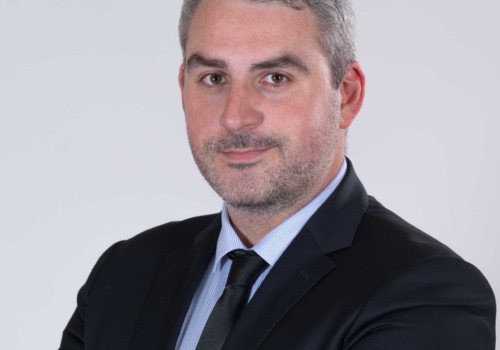


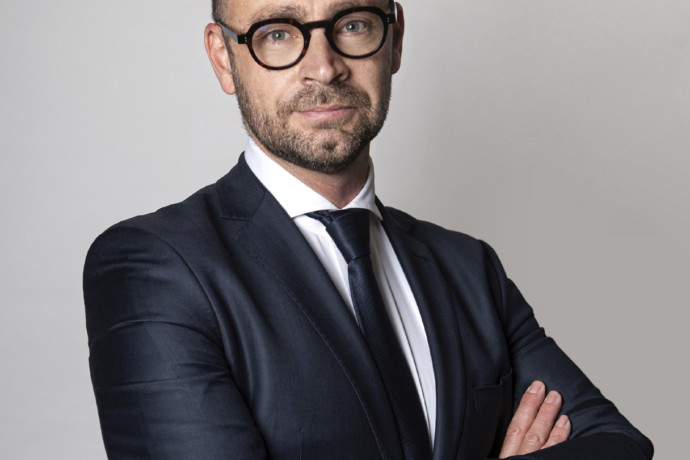
PORTRAIT : DAVID MOUHOUBI, GÉNÉALOGISTE AU DÉPARTEMENT INTERNATIONAL
David Mouhoubi est entré au Département international d'ADD ASSOCIÉS il y a 3 ans, à l'été 2020. Confinement, tilt et carabinieri : il nous raconte son parcours, ses expériences et sa vision du métier de généalogiste successoral.
Bonjour David, pouvez-vous vous présenter en quelques mots ?
Par où commencer… ? Sans doute par le fait que j'ai fait des études d'histoire. Puis je me suis dirigé vers la médiation culturelle, ce qui m'a amené à travailler dans le secteur de l'art contemporain pendant une dizaine d'années. Par la suite j'ai travaillé dans l'évènementiel, puis j'ai eu envie de changer d'air. Un jour, j'ai regardé un documentaire sur les secrets de famille dans lequel un généalogiste successoral intervenait. Ça a tout de suite fait tilt, mais je ne me voyais pas postuler comme ça dans une Étude, donc je me suis inscrit à un diplôme universitaire de généalogie à l'Université de Nîmes. J'ai passé mes examens en février 2020, juste avant le confinement, puis j'ai postulé chez ADD ASSOCIÉS. J'y suis entré en août 2020.
Qu'est-ce qui a fait « tilt » lorsque vous avez regardé cette émission ?
Plusieurs aspects. Le défi de la chasse au trésor, qui est réel : on part souvent avec peu d'éléments, et il faut arriver à ses fins. Il y a le côté humain, car on rentre dans la vie des gens de manière à la fois très intime et très authentique. Et puis la dimension historique aussi : j'aime le lien que ce travail engendre avec le passé, proche ou lointain. Ce métier, c'est avant tout une question de lien.
Pourquoi avez-vous intégré le département international et quels souvenirs avez-vous de vos premiers pas ?
Je parle plusieurs langues [français, anglais, italien, polonais et allemand, ndlr], ce qui a sans doute aidé à ce qu'on me propose ce département mais à vrai dire, c'est celui que j'aurais choisi ! Je me souviens d'une mise dans le bain très rapide. C'est ce qui était très agréable dans le début de ma formation : mon chef d'équipe était à côté de moi mais m'a vite laissé acquérir les bons réflexes. Comme il fallait déjouer les confinements, je suis parti très vite en Italie, d'abord accompagné puis seul, et ça ne faisait pas deux mois que j'étais là !
J'aime le lien que ce travail engendre avec le passé, proche ou lointain. Ce métier, c'est avant tout une question de lien.
On a souvent une vision très romanesque du métier : la chasse au trésor que vous évoquiez, les voyages… Est-ce seulement ça, être généalogiste successoral ?
Non bien sûr, d'autant que nous traitons plusieurs dossiers en même temps, donc il faut jongler avec beaucoup d'impératifs de temps, les délais administratifs – à l'étranger, on peut attendre un acte d'État civil plusieurs mois ! – et ainsi de suite. Mais je dois reconnaître que beaucoup de choses continuent de m'épater, comme cet entrelacement permanent entre la petite et la grande histoire. Le génocide arménien, la pauvreté qui fait fuir les Italiens partout dans le monde, la Seconde Guerre mondiale bien entendu… Tout ceci a des réalités tangibles : les familles séparées par la guerre, etc. Je repense à un homme né en 1919 en Prusse-orientale à la limite du couloir de Dantzig, qui s'est retrouvé au service militaire en 1939 quand la Seconde Guerre mondiale a éclaté, qui a été fait prisonnier à Saint Nazaire, resté en France en tant que prisonnier de guerre, marié à la fille de l'artisan chez qui il travaillait, mort à 100 ans… Ce sont des destins très impressionnants.
Comment se passe le travail dans les pays que vous visitez, et quelles en sont les spécificités ?
D'une manière générale, il y a une montée en puissance de la protection des données privées, donc les organismes vont être de plus en plus réticents à donner un accès, même partiel, à l'État civil, alors qu'en France une autorisation ministérielle nous permet d'y accéder. Il y a des pays, comme la Pologne, où les accès sont très restreints. Il faut avoir un mandat spécifique, ce genre de choses. En Italie, c'est un peu pareil : il faut parfois faire des pieds et des mains pour avoir accès aux documents que nous recherchons !
Comment se fait le contact avec les héritiers ?
Ça dépend des pays. L’Italie, par exemple, est une grande terre d'émigration. Tout le monde a dans sa famille des gens partis en Amérique, en Australie ou en France… Le problème, c'est que ça a généré un système d'arnaque à la généalogie qui fut très médiatisé dans le pays. Si bien que quand une Étude française arrive et toque à la porte, il y a une grande méfiance. C'est compliqué mais on fait avec, en trouvant des partenaires sur place pour éviter d'avoir affaire aux carabinieri !
Certains descendants, qui vont s'appeler Matthew ou Larry, ne savent pas pourquoi mais je sais, moi, que c'est parce que tel arrière-grand-parent s'appelait Matteo ou Lorenzo.
Vous vous rendez beaucoup en Italie…
Oui, c'est là que je vais le plus. Il se trouve qu'on travaille parfois sur des recherches au 6e degré. C'est-à-dire qu'il faut remonter aux arrière-grands-parents, puis redescendre. En Italie, je dois souvent me rendre dans un petit village reculé où tout a démarré, mettons à la moitié du XIXe siècle, et au fur et à mesure de mon travail je retrouve une descendance. Ce qui va souvent m'amener à contacter de la famille en Australie, en Argentine, aux États-Unis… Et on recompose ainsi des destinées et des tableaux incroyables. Certains descendants, qui vont s'appeler Matthew ou Larry, ne savent pas pourquoi mais je sais, moi, que c'est parce que tel arrière-grand-parent s'appelait Matteo ou Lorenzo. Ça m'émeut beaucoup.
Comment voyez-vous l'avenir de votre métier ?
Sans aucun doute bouleversé par la révolution de l'intelligence artificielle et de la numérisation des données. Est-ce que l'IA pourra faire une partie des recherches, la plus fastidieuse ? Probablement, pour autant, cela ne remplacera pas notre métier : ce n'est pas tant qu'il faille compter sur notre instinct – je m'en méfie, c'est le meilleur moyen de se tromper – mais à un moment donné, beaucoup d'obstacles nécessitent un regard humain. Sans oublier le contact, qui reste essentiel.
David Mouhoubi joined the International Department of ADD ASSOCIÉS 3 years ago, during the summer of 2020. Confinement, tilt and carabinieri: he tells us about his career, his experiences and his vision of the heir hunters profession.
Hello David, can you introduce yourself in a few words?
I studied history at University. Then I turned to cultural mediation, which led me to work in contemporary art for about ten years. I worked in communication, but I wanted a change. One day, I watched on TV a documentary on family secrets with an estate genealogist speaking. It immediately made “tilt” for me, but I couldn't imagine myself searching a job like that without qualifications. So I enrolled in a university degree in genealogy at the University of Nîmes. I took my exams in February 2020, just before confinement, then I applied to ADD ASSOCIÉS. I joined the team in August 2020.
What was this "tilt" you talk about?
It combines several aspects. The challenge of the treasure hunt is real: we often start with few elements, and we must achieve our goals. There is the human part, because we get into people's lives in a way that is both very intimate and very authentic. And then the historical dimension: I love the link that this job makes with the past, near or far. This profession is above all a question of connection.
Why did you join specifically the international department and what do you remember about your first steps?
I speak several languages [French, English, Italian, Polish and German, editor's note], which probably helped me to join this department but to be honest, it's the one I would have chosen! I remember working “real” very quickly. My team leader was next to me but he quickly let me acquire the right reflexes. As we had to “thwart” the confinements, I visited very quickly Italy, accompanied first, then alone, after only two months!
I love the link that this job makes with the past, near or far. This profession is above all a question of connection.
We often have a romantic vision of this profession: the treasure hunt as you mentioned, the trips... Is that all?
No, of course not, especially because we process several cases at the same time, so we have to juggle a lot of time constraints, administrative delays - abroad, we have to wait for a civil status certificate for several months! - and so on. But I must say that many things continue to amaze me, like this permanent intertwining between the “small” and the “big” history. The Armenian Genocide, the poverty that scares Italians all over the world, the Second World War of course… It has tangible realities: families separated by war, etc. I remember the case of that man born in 1919 in East Prussia on the edge of the Danzig corridor, who get in military service in 1939 when the Second World War began, who was taken prisoner in Saint Nazaire, remained in France as a prisoner of war, married to the daughter of the craftsman for whom he worked, died at the age of 100… These are very impressive fates.
How does it work in the countries you visit. Is there some specifics things?
Generally speaking, the protection of private data is in expansion everywhere, so the organizations will be more and more reluctant to give us access, even partial, to civil status, whereas in France a ministerial authorization allows us to access it. There are countries, like Poland, where access is very restricted. You have to obtain a specific mandate, that sort of thing. In Italy, it's a bit the same: sometimes you have to be very imaginative to get access to the documents you are looking for!
What about the contact with the heirs?
It depends on the countries. Italy, for example, is a great land of emigration. Everyone has people in their family who have gone to America, Australia or France… But there is a problem: this has generated a genealogy scam system highly publicized in the country. So when a French firm arrives and knocks at the door, people are suspicious. It's complicated but we deal with it: we find partners to avoid problems with the carabinieri!
Some descendants are named Matthew or Larry, they don't know why. But I know it's because a great-grandparent was called Matteo or Lorenzo. It's incredible.
You travel to Italy a lot…
Yes, a lot. You know… Sometimes we work on research at the 6th degree. That means we have to research the great-grandparents, then back down. In Italy, I often have to go to very small villages where everything started, let's say in the middle of the 19th century. And as my work progresses, I find descendants. It often leads me to contact family in Australia, Argentina, the United States… And finally I recompose destinies, like incredible paintings. Some descendants are named Matthew or Larry, they don't know why. But I know it's because a great-grandparent was called Matteo or Lorenzo. It's incredible.
How do you imagine the future of your profession?
Undoubtedly it will be upset by the revolution of artificial intelligence and digitalization of data. Will an AI be able to make some of the more tedious research? Probably. However, it won't replace our profession: it's not a question of instinct - I don't really trust that, it's the best way to be wrong - but at the end, many of obstacles require a human vision. And of course there is the human contact, which remains essential.